Understanding Different Types of MCBs and Their Applications
Micro circuit breakers (MCBs) are vital elements in the current electrical systems. They are used as automatic protective devices to guard the low-voltage circuits against overcurrent, short circuits, and electrical faults. MCBs are easily reset upon being tripped, as opposed to the fuses, which makes them convenient and safe. The knowledge of the various varieties of mcb breaker types and their uses is important in obtaining optimal electrical protection in homes, commercial and industrial spaces.
How MCBs Work
There are two main mechanisms by which MCBs work.
Thermal Mechanism
This is in response to prolonged overcurrents to ensure that the wires are not overheated. It is based on a bimetallic strip that bends because of excess heat, and the switch is activated to break the circuit.
Magnetic Mechanism
This is an immediate reaction to short circuits. With a solenoid or coil, a magnetic force is produced, which activates the breaker after milliseconds and safeguards equipment and other possible hazards.
MCBs are also manual operable so that they can be turned on or off by the user to be maintained or repaired.
Types of MCBs and Their Applications
The tripping characteristics of MCBs define the classification of these devices on the basis of their responsiveness to current surges.
Type B MCBs
Type B MCBs are very sensitive, and they trip when the current is more than three to five times the load rating. They are the best in a home setting, guarding lighting circuits, heating systems and domestic appliances. Their sensitivity makes sure that minor overloads are dealt with in time, reducing the chance of electrical fire outbreaks or equipment destruction.
Type C MCBs
MBCS trip Type C. The current is limited to five to ten times the rated current. They can be used in commercial and small industrial applications that have inductive loads such as air conditioners, fans, fluorescent lighting and small motors. These breakers compromise between sensitivity and tolerance and ensure that the disruption is not overdone, yet ensure the protection is reliable.
Type D MCBs
Type D MCBs are intended to be used in heavy industry, and they tripped ten or twenty times the current of the trip setting. They are applied to high inrush current equipment at start-ups, including big motors, transformers, and welding machines. Type D breakers are used to make sure that industrial machinery is safely operated without frequent interruptions, whilst still carrying out the required protection.
Specialized MCBs
Type K
Trips between eight and twelve times the rated current and is used in the protection of motors in situations where standard Type D breakers might not be adequate.
Type Z
So sensitive, it trips at two to three times the rated current. Most appropriate in sensitive electronics and semiconductors, and offers quick protection against small surges.
Pole Configurations and Applications
MCBs are also chosen by the arrangement of the wiring of the system and the number of poles needed.
Single-Pole
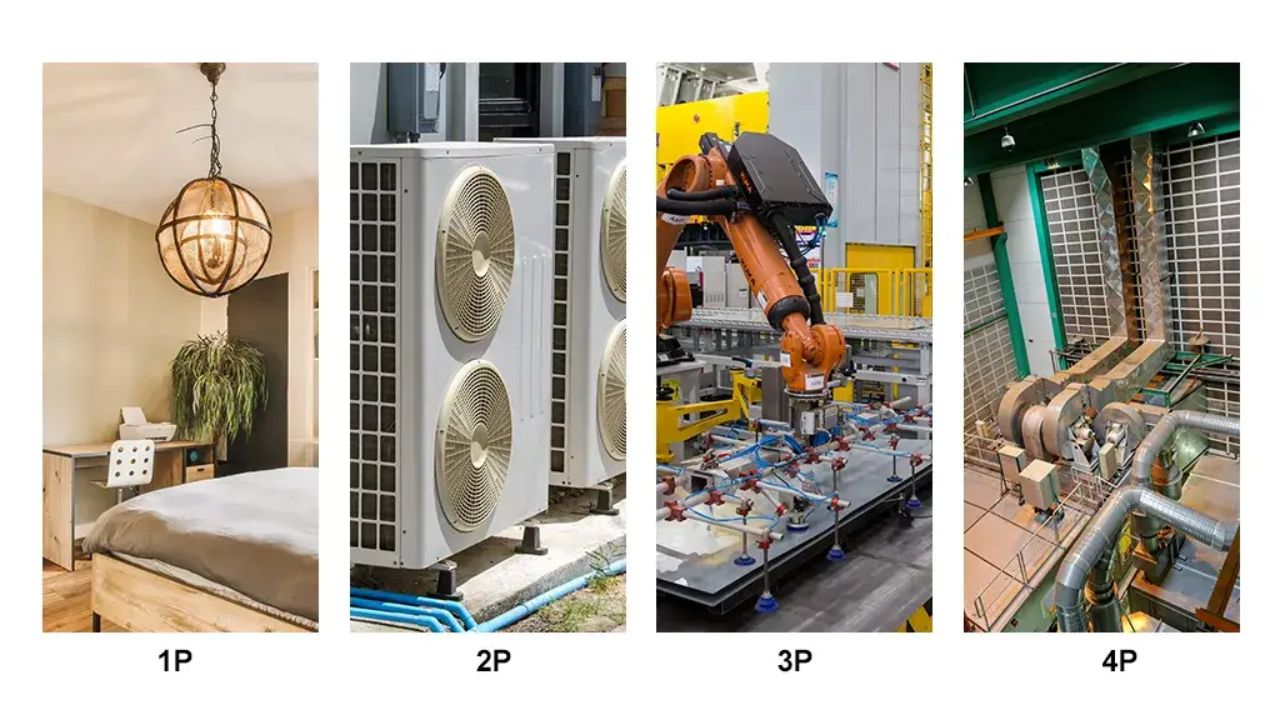
It operates a single-phase wire, which is often utilized with lighting and general outlets.
Double-Pole
Switches on the phase and neutral line can be used with main switches, water heaters, and air conditioning units.
Triple-Pole and Four-Pole
Triple and four-pole is employed in industrial applications where it is necessary to have control over the three-phase power and give full isolation to equipment, which is of vital importance.
Breaking Capacity and Safety
The breaking current of the MCB is known as the breaking capacity, which is expressed in kiloamperes, and shows the fault current that the MCB can safely interrupt. It is important to select a breaker of a sufficient breaking capacity to eliminate equipment damage and guarantee the safety of the personnel.
MCBs Compared to Other Protective Devices
RCDs (Residual Current Devices)
Guard against electric shocks to people by sensing leakage to earth.
MCCBs (Molded Case Circuit Breakers)
Smaller industrial systems require higher current settings and adjustable settings, which are designed in MCCBs.
MCBs
Suited to residential and light commercial installations, and emphasizes overload and short protection.
Importance of Proper Selection and Maintenance
Choosing the correct type of MCB to use on load and application will avoid tripping often, minimize downtime, and protect equipment of great value. Periodic testing and servicing of MCBs are important to keep them operating at their optimum level to protect homes, businesses and industrial processes against electrical risks.
Conclusion
Modern electrical safety is impossible without MCBs. B, C, D, K and Z breakers are solutions to residential, commercial and industrial uses. The knowledge of their nature, uses, and requirements can assist electricians and users to provide dependable protection, minimize risks and have efficient electrical systems in diverse settings.